·

Connect with Atehea


Developed by Brian Nguyen (hoangdesu.com) with 🧡
Developed by Brian Nguyen (hoangdesu.com) with 🧡
March 30, 2026
84Wondering why pillows turn yellow? Learn what causes yellow pillow stains, how to clean them, when to replace your pillow and how to prevent stains.

You pull off your pillowcase expecting to see a clean white pillow underneath, only to find yellow stains staring back at you.
It is common, frustrating and usually easy to explain. Pillows absorb far more than most people realize while they sleep. Sweat, skin oils, drool, damp hair, skincare residue, humidity and tiny particles like dead skin cells can all settle into the fabric over time. As that buildup accumulates, the pillow begins to discolor and develop yellow stains.
The good news is that pillow yellowing usually does not happen because of one major mistake. It is typically caused by small, repeated habits night after night. Once you understand what causes it, preventing it becomes much easier.
Pillows rarely turn yellow overnight. The process is gradual.
Each night, moisture from your body reaches the pillow. That moisture often carries salts, proteins, oils, enzymes and bacteria. When the pillow dries, those substances do not disappear. They stay trapped in the fibers and begin to oxidize. Over time, that repeated cycle of moisture, drying and oxidation creates the cream, yellow or yellow-brown discoloration many people notice.
That is why even a pillow that seems clean on the surface can slowly lose its bright white appearance.
Not everyone yellows pillows at the same rate.
Some people naturally sleep hotter, sweat more or have oilier skin and hair. Others produce more noticeable residue from their scalp or skincare products. These factors alone can make one person’s pillow discolor much faster than another’s.
There is also a less common explanation to keep in mind. In rare cases, body chemistry can make sweat or skin secretions stain fabric more visibly. Conditions such as chromhidrosis or pseudochromhidrosis can contribute to unusual discoloration. For most people, though, a yellow pillow is simply caused by ordinary sweat, oils, saliva and moisture buildup rather than a medical issue.
Yellowing usually does not come from one single source. In most cases, several everyday factors build up in the same spot over and over again. Because a pillow sits under your face and hair for hours each night, it naturally absorbs moisture, oils, residue and particles your body sheds while you sleep.
The most common reason pillows turn yellow is overnight perspiration. Even people who do not think of themselves as sweaty sleepers still release moisture as part of normal temperature regulation.
That moisture carries salts, proteins and other compounds into the pillow. Once the water evaporates, those substances remain behind in the fibers. Repeated night after night, they gradually create the yellow cast many pillows develop.
This is also why yellowing can seem to appear suddenly when it has actually been building for weeks or months. Warm climates, heavy bedding, poor airflow and night sweats can speed up the process, but even cooler sleepers can see discoloration over time.
Your skin and scalp continuously produce natural oils and those oils transfer easily to fabric. Each time your cheek, forehead, neck or hair rests on the pillow, a small amount is left behind.
At first, that transfer may not be visible. But once it mixes with moisture and daily use, it begins to create dull patches and yellow staining. This tends to happen faster for people with oilier skin, oily hair or habits like sleeping on the same side every night.
Over time, the pillow may not only look discolored but also feel less fresh, since oils cling stubbornly to both fabric and filling.
A pillow often absorbs more of your bedtime routine than you realize. Moisturizers, serums, overnight masks, leave-in conditioners, hair oils and styling products can all transfer while you sleep, especially if they have not fully absorbed before bed.
Once those products rub off, they mix with heat, sweat and natural oils, creating a residue that is more likely to stain than moisture alone. This is one reason some pillows yellow quickly even when the bed appears clean overall.
The issue is not that these products are bad. It is simply that many are designed to stay on the skin or hair for hours. If they end up on your pillow instead, the fabric slowly collects layer after layer of residue.
Saliva is another major cause of yellow pillow stains, especially for side sleepers, stomach sleepers, mouth breathers or anyone who snores or sleeps with congestion.
Drool may seem harmless because it dries quickly, but repeated exposure leaves behind moisture, enzymes and organic residue that can discolor fabric over time. These stains are often concentrated in one area rather than spread evenly across the pillow.
That is why a pillow can look clean in one corner and noticeably yellow in another. Saliva-related staining is very common, but because it develops slowly, many people do not realize it is one of the main contributors.
Going to bed with wet or slightly damp hair can send a surprising amount of moisture into a pillow. Unlike a quick splash of water, damp hair stays pressed against the fabric for hours, giving the pillow time to absorb that moisture deeply.
If this happens often, yellowing becomes more likely and the pillow may also begin to smell musty. Humidity makes the problem worse because the pillow takes longer to dry fully between uses. That repeated cycle of lingering moisture can lead to discoloration, stale odors and a less hygienic sleep surface.
Even if the pillow feels dry by morning, moisture trapped inside can still contribute to gradual staining over time.
Not all pillow yellowing comes from obvious stains. Sometimes it is simply the result of accumulated use.
As you sleep, your body sheds dead skin cells, tiny particles from the scalp and bits of dust and debris from the room. On their own, these may not create dramatic marks, but over time they contribute to the dull, aged look that makes a pillow appear dirty and yellow.
This is especially common when pillows or pillow protectors are not washed regularly. A standard pillowcase catches some buildup, but it does not stop everything from reaching the pillow itself. Once those particles combine with moisture and oils, the pillow gradually loses its brightness.
A yellow pillow is not automatically dangerous, but it is often a sign that the pillow has absorbed a significant amount of moisture, oil and everyday residue. In mild cases, the discoloration may be mostly cosmetic. In more noticeable cases, it can point to deeper buildup inside the pillow.
A lightly yellowed pillow can simply reflect normal wear. Many pillows begin to discolor long before they become unusable, especially if they are white or light-colored beneath the pillowcase.
In these cases, the main issue is appearance rather than immediate hygiene. The pillow may still feel comfortable, smell normal and perform well. If the stain is surface-level, proper washing and drying may improve it.
The concern grows when yellowing is accompanied by odor, dampness, heaviness or irritation. A pillow that regularly absorbs sweat, drool, oils and moisture can become a more welcoming environment for dust mites, bacteria, mildew and allergens.
For some people, that may show up as a stuffy nose at night, more frequent breakouts or a pillow that smells off no matter how often the outer case is washed. In that sense, the yellow color is not the problem itself. It is the visible clue that the pillow has collected more buildup than it should.
A yellow pillow is usually worth replacing when the discoloration is deep, the smell lingers, the filling feels lumpy or flat or the pillow no longer supports the head and neck properly.
At that point, cleaning may improve the appearance a little, but it often will not solve the deeper problem. A pillow should support clean, comfortable sleep. If it no longer feels fresh, supportive or hygienic, replacement is usually the smarter choice.
Preventing yellowing is much easier than trying to reverse it later. Once moisture and residue reach the pillow core, stains become harder to remove completely. The best strategy is to stop as much buildup as possible before it reaches the pillow itself.
A regular pillowcase helps, but it is not always enough. It is mainly designed for comfort and appearance and moisture and oils can still pass through over time.
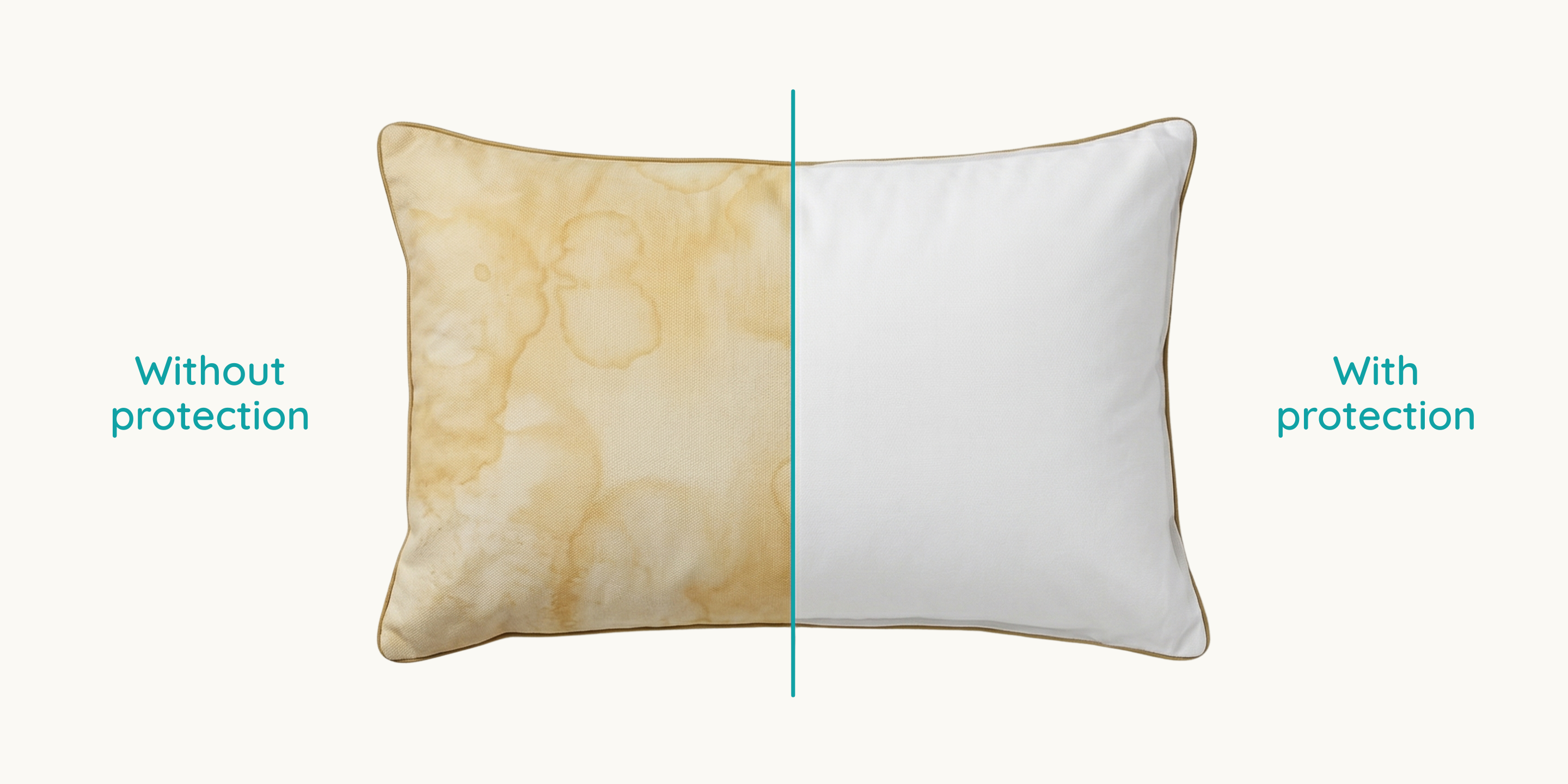
That is where a pillow protector makes a real difference. A protector creates a barrier between your pillow and the sweat, saliva, skincare residue and daily grime that cause yellowing.
Atehea’s hygienic pillowcase is designed to function as a pillow protector, helping shield the pillow core from the moisture and residue that gradually stain it. Because it creates a waterproof yet breathable barrier, it helps reduce the chance of sweat and drool soaking into the pillow while still keeping the sleep surface comfortable. Used under a regular pillowcase, it adds practical protection against one of the biggest causes of yellowing: repeated absorption.
The less moisture your pillow absorbs, the less opportunity stains have to develop. Small bedtime habits can make a noticeable difference.
Going to sleep with dry hair instead of damp hair helps immediately. Letting skincare and haircare products absorb fully before bed also reduces transfer, especially with heavier overnight products.
Room conditions matter too. A bedroom that runs hot or humid will make pillows yellow faster because the fabric takes longer to dry and collects more perspiration over time. Better airflow, cooler sleep conditions and lighter bedding can all help reduce the daily moisture load your pillow has to handle.
One of the most common mistakes is washing only the outer pillowcase while forgetting the layers underneath.
Pillowcases should be washed often enough that oils, sweat and product residue do not build up heavily. Pillow protectors should also be washed regularly so they continue doing their job instead of becoming another place where buildup collects.
The pillow itself should be cleaned whenever the care label allows it. Even when a protector is used, the pillow still benefits from occasional washing or refreshing. Consistent care removes the residue that causes yellowing before it settles deeply and oxidizes.
Pillows stay cleaner longer when the rest of the sleep environment stays cleaner too. Fresh sheets, cleaner hair, a cleaner bedroom and a better bedtime routine all reduce what ends up on the pillow night after night.
Something as simple as washing off makeup, sunscreen or styling products before bed can reduce buildup more than many people expect.
In other words, preventing pillow yellowing is not about fixing stains after they appear. It is about creating a sleep setup that gives stains fewer chances to form in the first place.
Cleaning a yellow pillow is not just about making it look whiter. It is about removing the oils, moisture residue and buildup that caused the staining in the first place. The process works best when it is done carefully, because pillows can be damaged by overly harsh washing or improper drying.
Before using any stain treatment or putting the pillow in the wash, always check the care label.
Not all pillows can be cleaned the same way. Some are machine washable, some need spot cleaning only and some materials, especially certain foam fills, can be damaged by soaking or machine agitation. A method that works for one pillow can ruin another.
The care label tells you how much water, heat and movement the pillow can safely handle, so it should always guide your cleaning process.
Yellow stains are usually made up of oils, sweat residue and absorbed buildup, so they often need to be loosened before a full wash.
Pre-treating gives the stained area a better chance of lifting during washing. For washable white pillows, a fabric-safe stain treatment can help brighten discolored patches before the pillow goes into the machine.
The goal is not to use the harshest product possible. It is to break down the residue without damaging the fabric.
A yellow pillow needs more than a quick freshen-up. It needs a proper wash that targets what is trapped inside.
When the care label allows machine washing, the pillow should be cleaned with enough room in the drum for water and detergent to move through it properly. That movement helps flush out the oils and residue that have settled into the filling.
A mild but effective detergent is usually the best choice because it removes body-related buildup without leaving heavy detergent residue behind. Avoid overloading the machine, since poor rinsing can leave both soil and detergent trapped inside.
Drying matters just as much as washing and it is often the step people rush.
A pillow that still holds moisture inside can quickly develop musty smells, clumping or even mildew. It should never go back on the bed until it is completely dry all the way through, not just dry on the surface.
Depending on the pillow type, that may mean a low-heat tumble dry, careful air drying or a combination of both. The key is patience. A pillow can feel dry on the outside while still holding moisture in the center.
Some pillows respond well to cleaning and feel noticeably fresher afterward. Others improve only slightly because the staining has already moved too deep into the fabric and filling.
When yellowing is very old, very dark or paired with odor and poor support, the issue is often bigger than appearance alone. At that point, repeated washing may not restore the pillow in a meaningful way.
If the discoloration remains heavy after proper cleaning, the filling feels worn out or the pillow no longer feels fresh and supportive, replacement is usually the better option.
Because a standard pillowcase is not a full barrier. Sweat, oils, saliva and moisture can still seep through over time and reach the pillow underneath.
Sometimes. Surface stains can often be improved with proper pre-treatment and washing. Older or deeper stains may fade but not disappear completely.
No. Most yellow stains come from sweat, oils, saliva and residue. But if a pillow also smells musty, feels damp or has been exposed to repeated moisture, mildew or mold may be part of the problem.
Wash pillowcases weekly, wash your pillow protector regularly and wash the pillow itself every 3 to 6 months if the care label allows.
The best approach is to reduce moisture and buildup before it reaches the pillow core. That means regular washing, dry hair before bed, letting skincare absorb fully and using a dedicated protective layer such as a hygienic pillowcase protector.